Geographical Data Interfaces
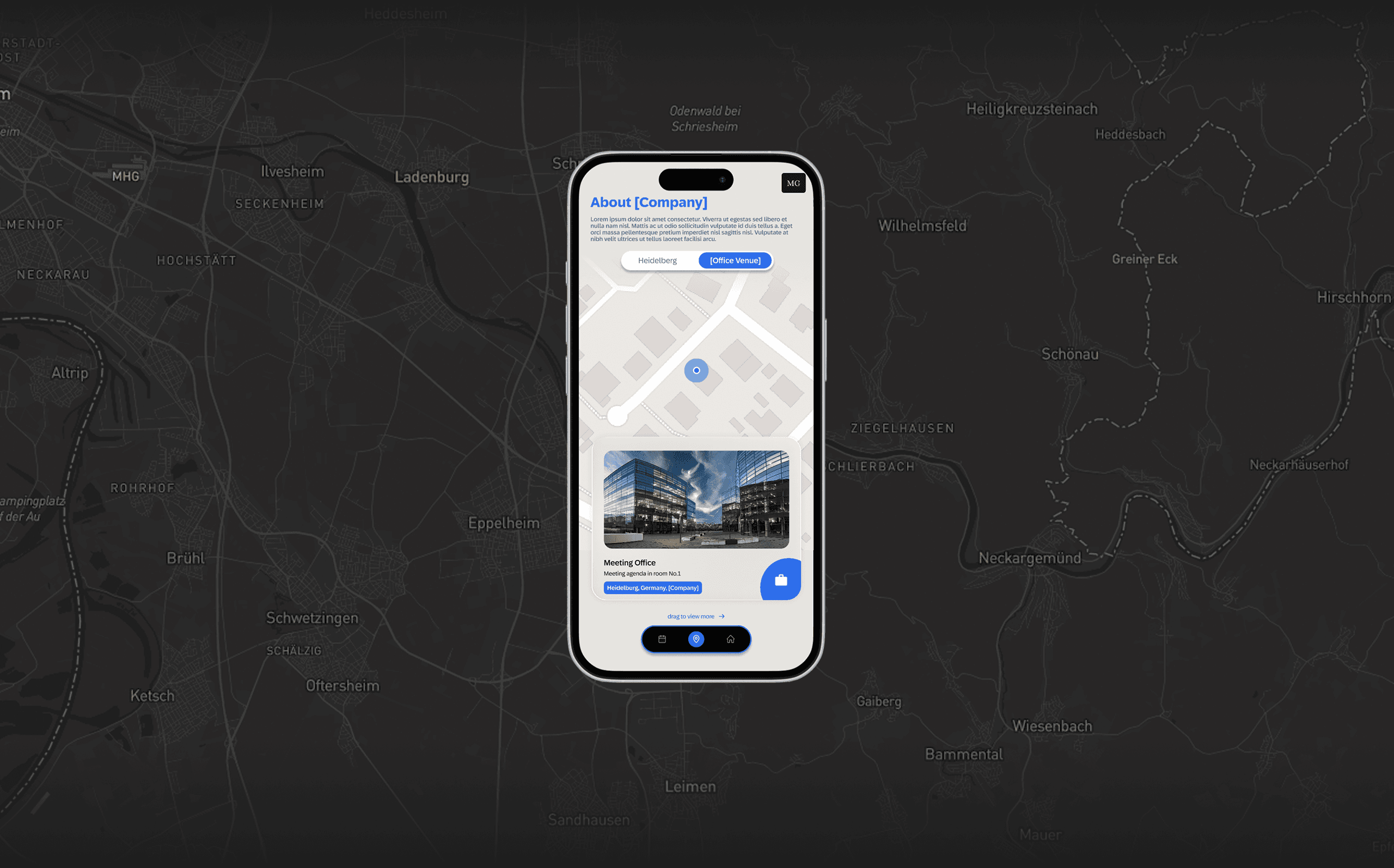
Analysis of mapping applications such as Crime Time demonstrated how dynamic visual markers and animated rings can communicate data density effectively on geographical canvases. This reinforced the value of symbolic indicators for map-based interactions.
Cross-Cultural Cartography
Comparing British and German map design revealed differences in purpose, style and visual density. British maps: simplified, public-facing, highly symbolic German maps: technical, layered, formal Blending both approaches enabled culturally inclusive map behaviour aligned with user expectations.
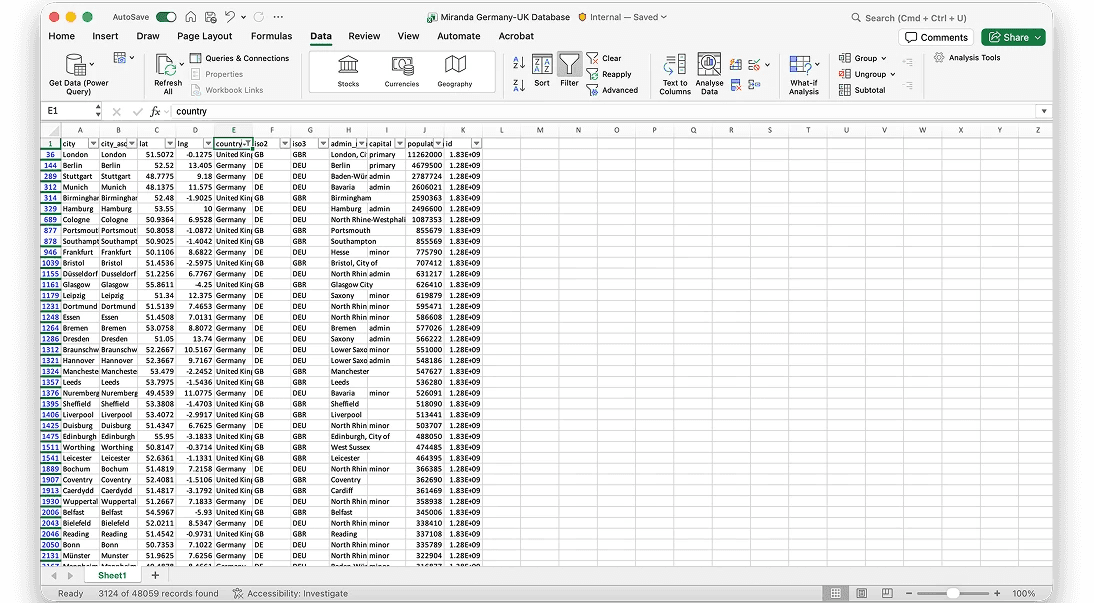
World Cities Dataset
Analysed population patterns through global geographical data. This showed Germany’s distributed urban centres suggesting the need for map designs that support distributed navigation across multiple important locations. In contrast with the UK’s concentrated clusters - supporting more hierarchical or hub-focused mapping styles. This influenced map spacing, pin distribution and layout ergonomics for mobile use.

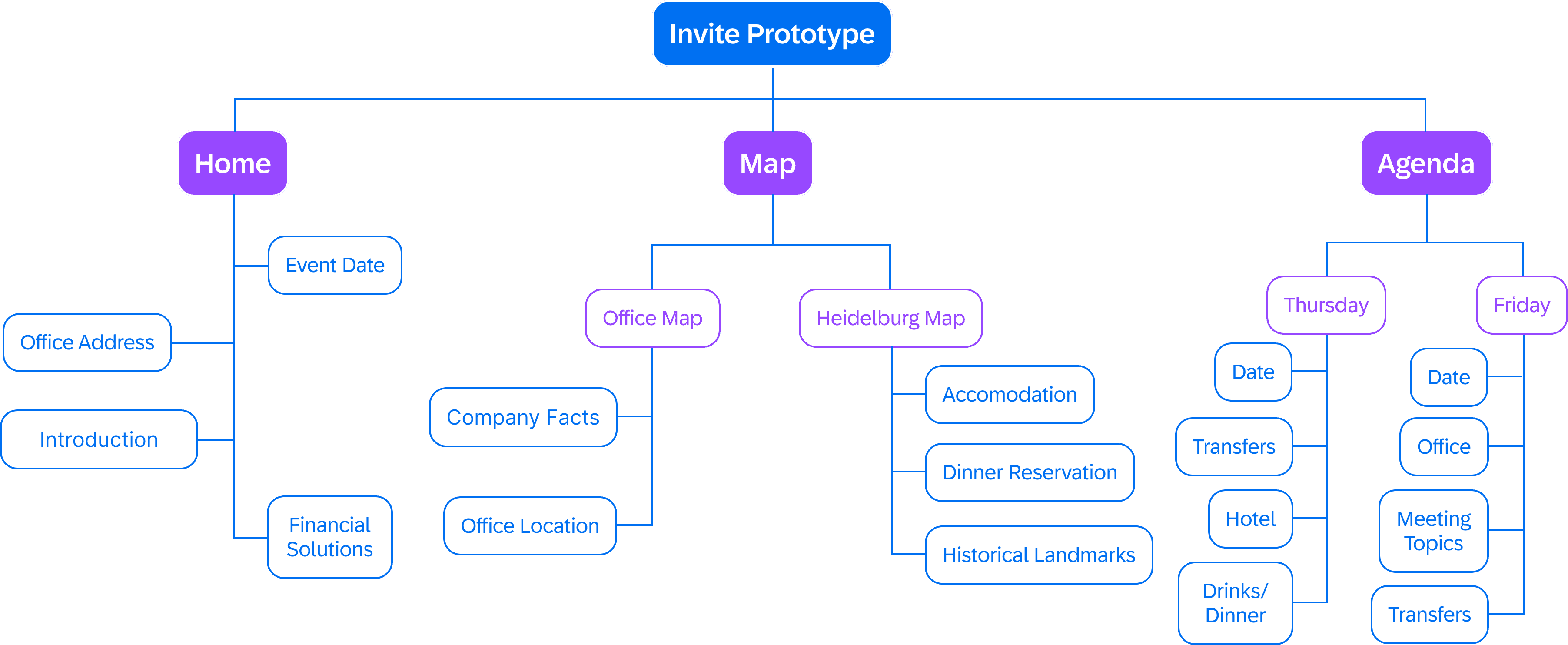
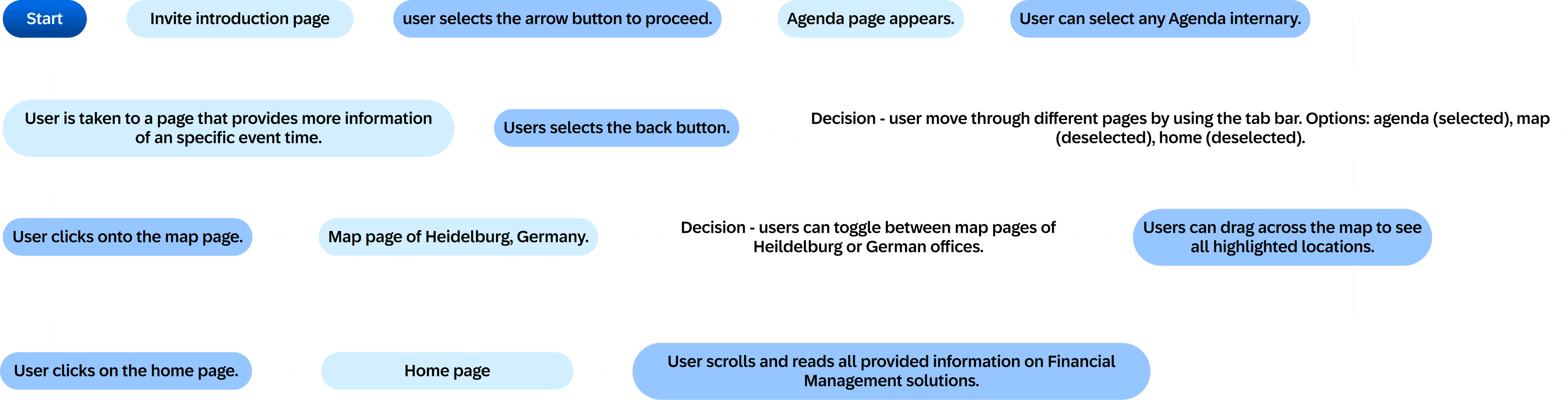
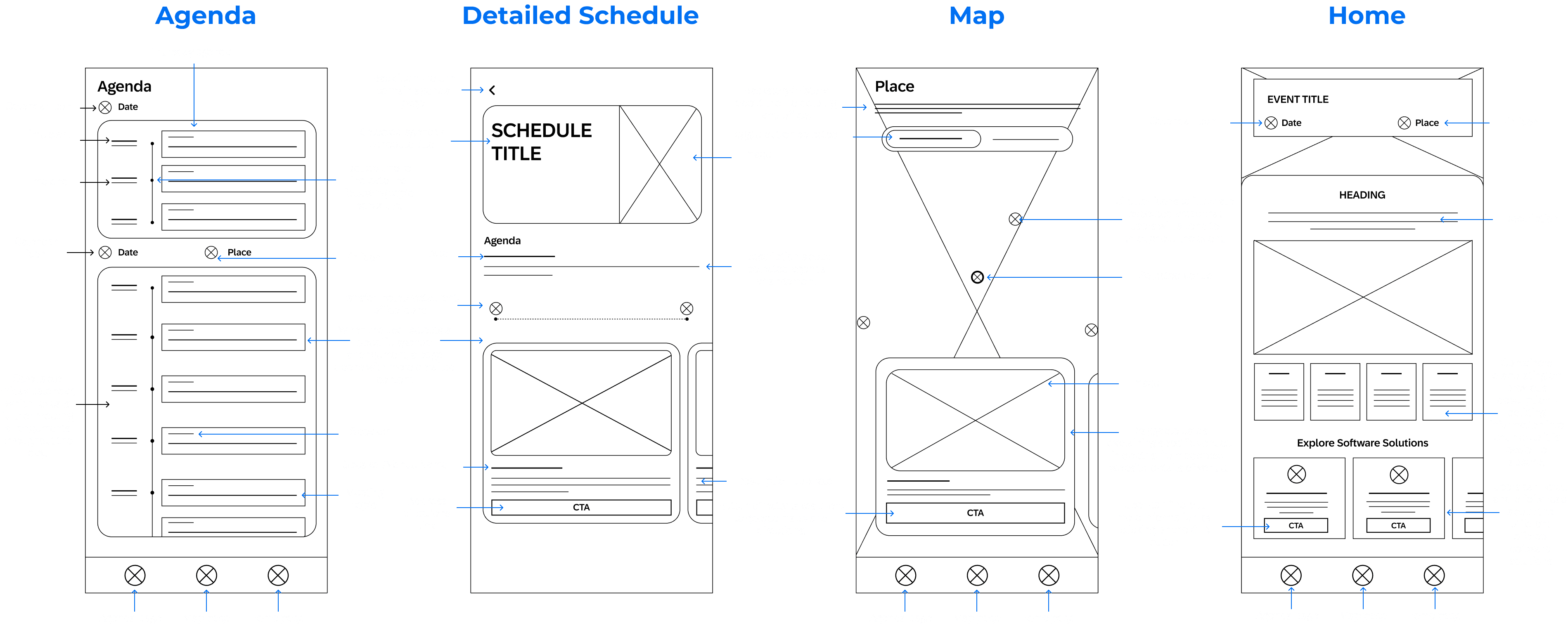
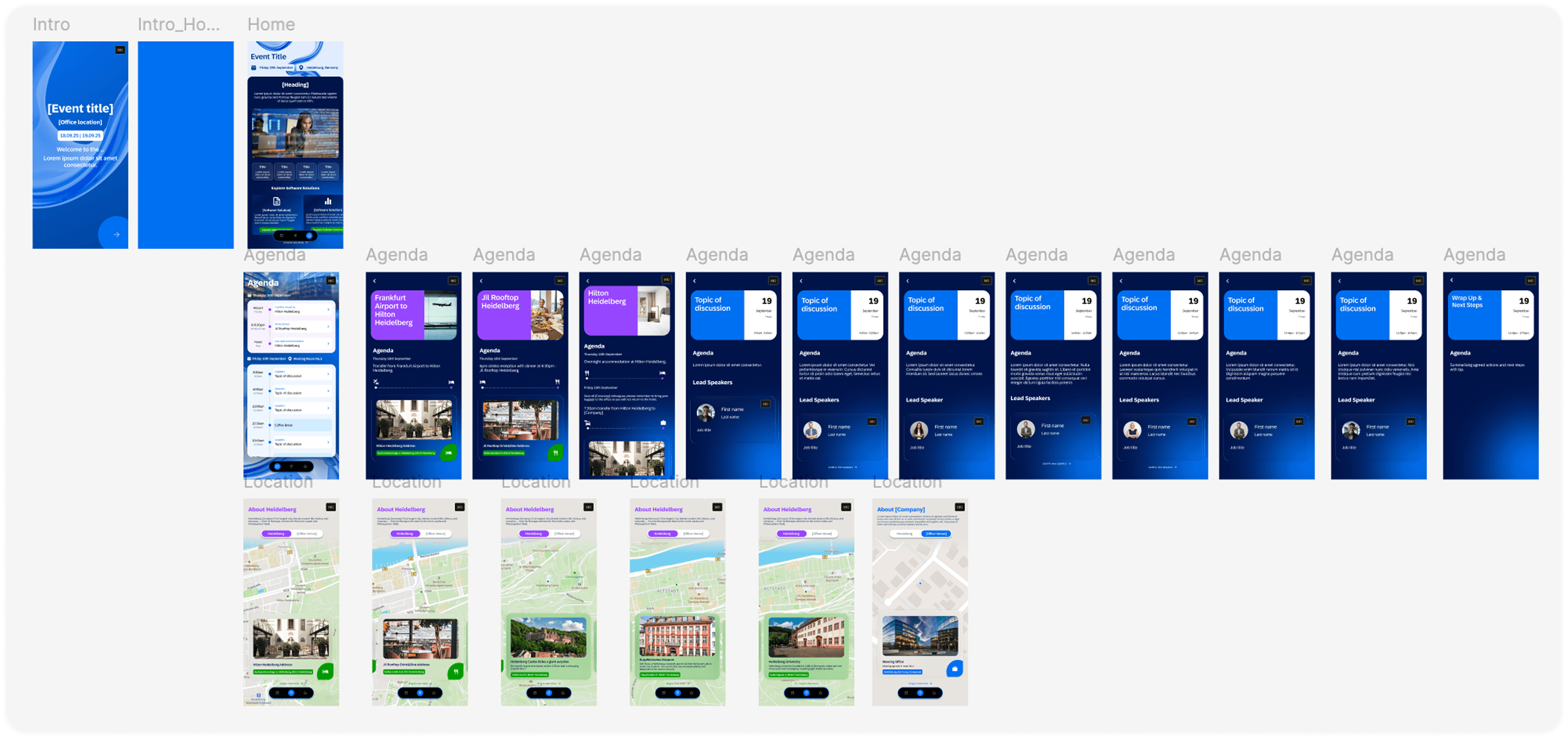
A structured two-day schedule with clear time blocks, categories and progressive disclosure.

Two interlinked map views: city context and office context, with clear symbology and colour cues.

Financial information, event summaries and “find out more” modules presented through scrollytelling.



Applied alt text for icons, maps and imagery
Icons contain a 24×24px minimum touch target sizing within frame to improve user actions.
Cognitive load reduction through chunking map address containers
The prototype supports a broad range of users and interaction contexts.
Utilised primary (blues), secondary/accent colours (green/purple) to support hierarchy, branding consistency and visual clarity.
Consisted of 72 Brand font for a structured type scale ensures legible headings, clear body text and predictable mobile behaviour.
Created a custom icon system communicates categories, locations and actions with clarity across both map and content modules.
PDFs, emails, fragmented content
Static agenda
Unified mobile-first prototype
Reduced navigation friction
Thanks for viewing